
What is Erudit AI?
Erudit AI is a HR analytics tool that helps HR managers to understand employee satisfaction, burnout and turnover levels in order to provide a better employee experience. Erudit uses Slack and Microsoft messaging tools in order to extract meaningful and anonymous insights about employee satisfaction.
Details
My role
I was part of a small product team where I have been involved in various projects such as creating an employee page structure, researching new Cohorts initiative and working on user activation and acquisition initiative.
Project overview
Our users were not renewing their accounts after an initial trial period, so we had to find the reasons behind it and work in reducing friction during user onboarding and activation stage.
The Users
Our main target users were HR managers and their team members as well as IT admins for their communication platforms such as Slack or Microsoft Teams.
Roles & Responsibilities
I was collaborating with another UX designer and product manager to identify the main causes of low user activation and I was responsible for introducing quick updates in order to activate user onboarding faster.
Scope & Constraints
We had a very tight deadline to be able to introduce small updates that could have a major impact on how users were onboarding on our product.


Overview
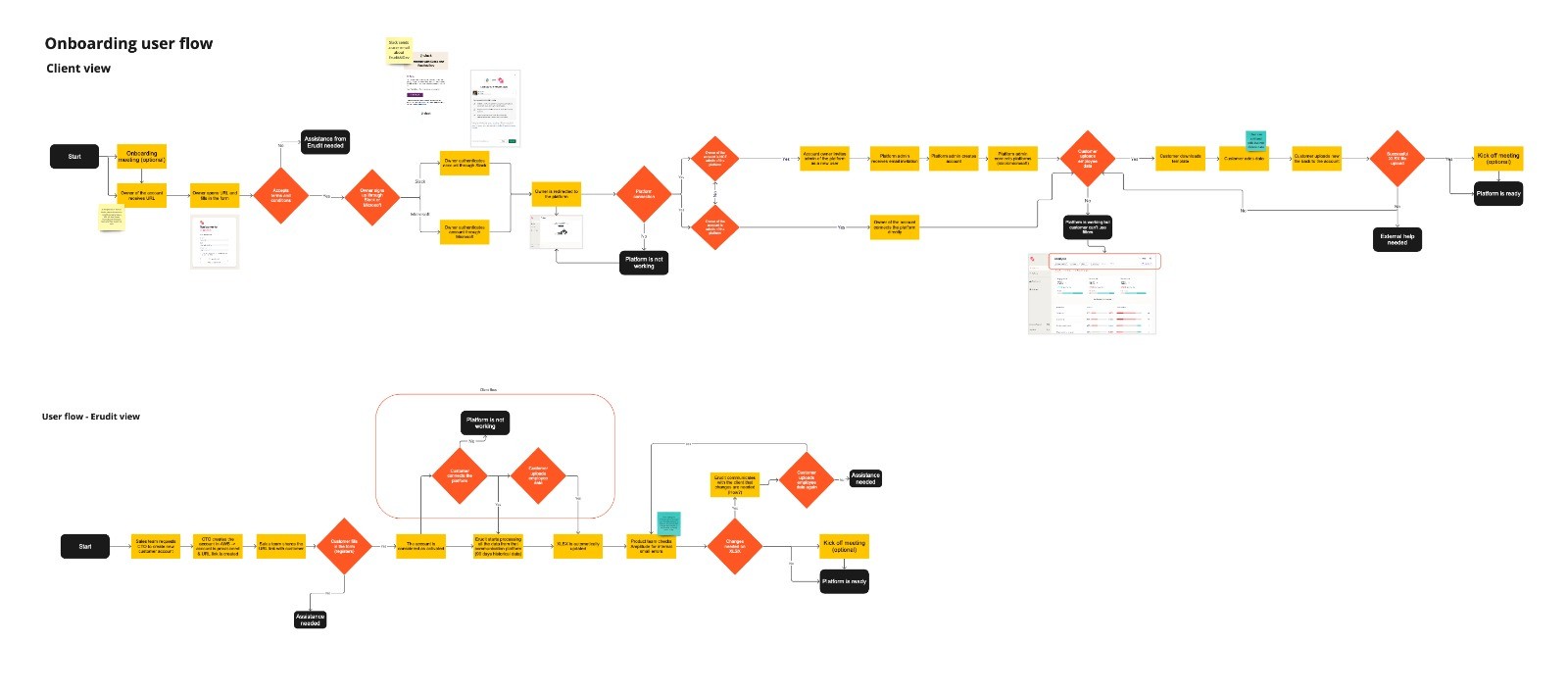
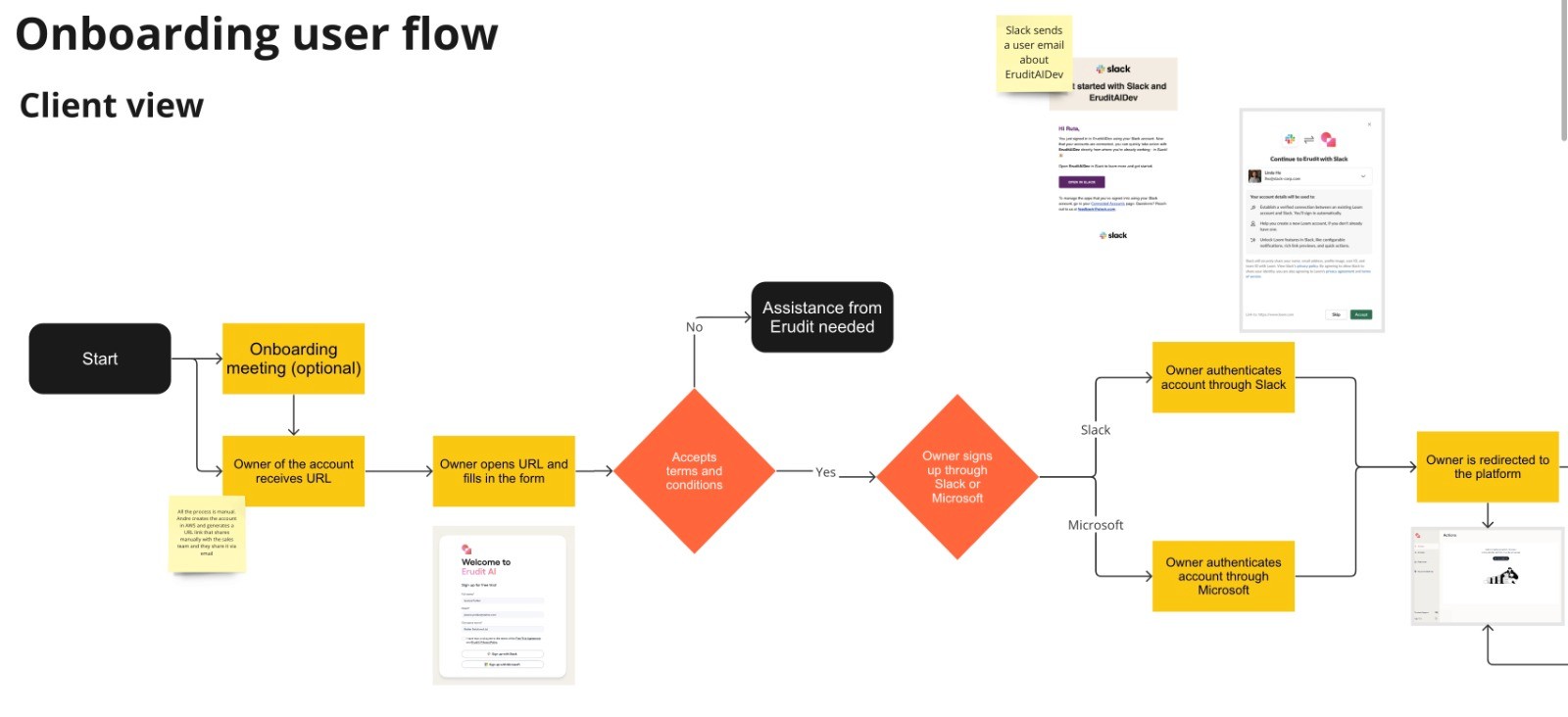
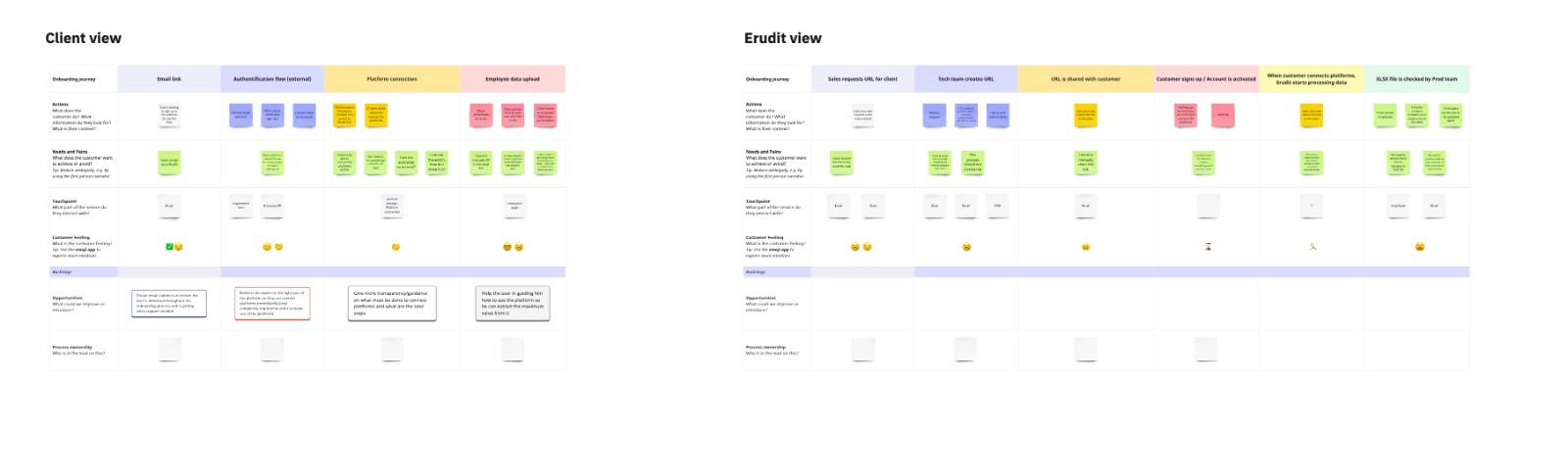
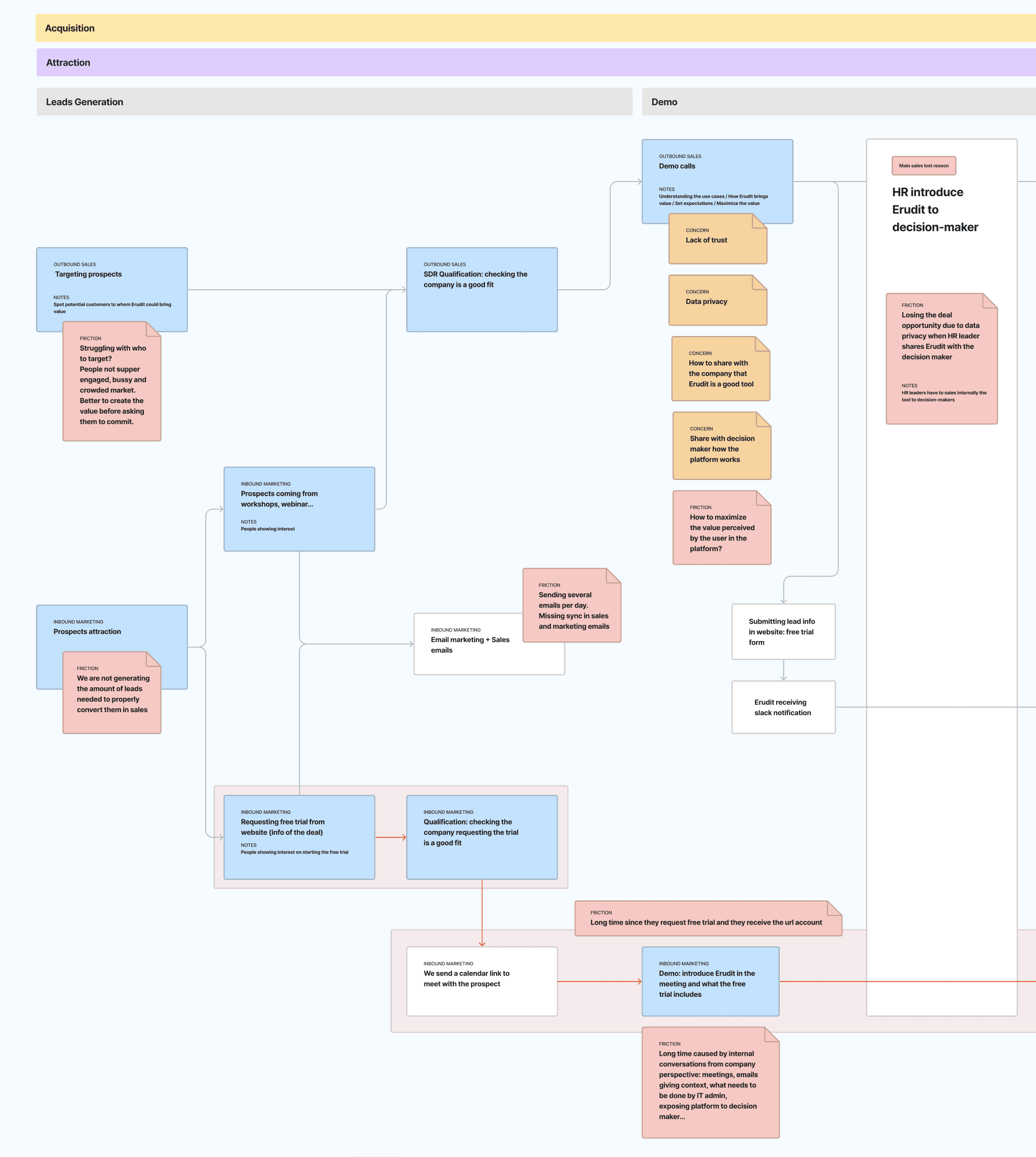
In order to understand current issues we were facing we collaborated cross-fuctionally with teams from Sales, Marketing and Compliance to understand current user onboarding. Then we started mapping out current user onboarding flow identifying key areas where we need to put our focus. Simultaneously we were mapping out the acquisition and activation process from user details submission on the website and initial demo call until full user onboarding.
Problem


Discovery
Current set up
Our users had to go through 3 stages in order to complete onboarding:
Account creation
This was a very manual process involving CTO and Sales teams sending account activation emails manually
Platform connection
Users had to connect their communication platforms in order to see the data on the platform. For that they needed to involve their IT manager. We identified this step as one of the major friction points in the journey.
XSLX exployee data submission
Users had to manually submit the list of their employees using employee page. This step created friction as users were making mistakes or they were not completing all mandatory fields so the data we could provide to them was limited.


The Solution
Together with product manager we identified key friction points and created a plan to quickly introduce following improvements:
Create automated email cadences to provide faster access to Erudits account
Guide user on the steps they need to take before they can use the platform
Create space for automatic employee data submission
We created series of email cadences to provide information and keep user informed during account creation process

We introduced new user onboarding flow

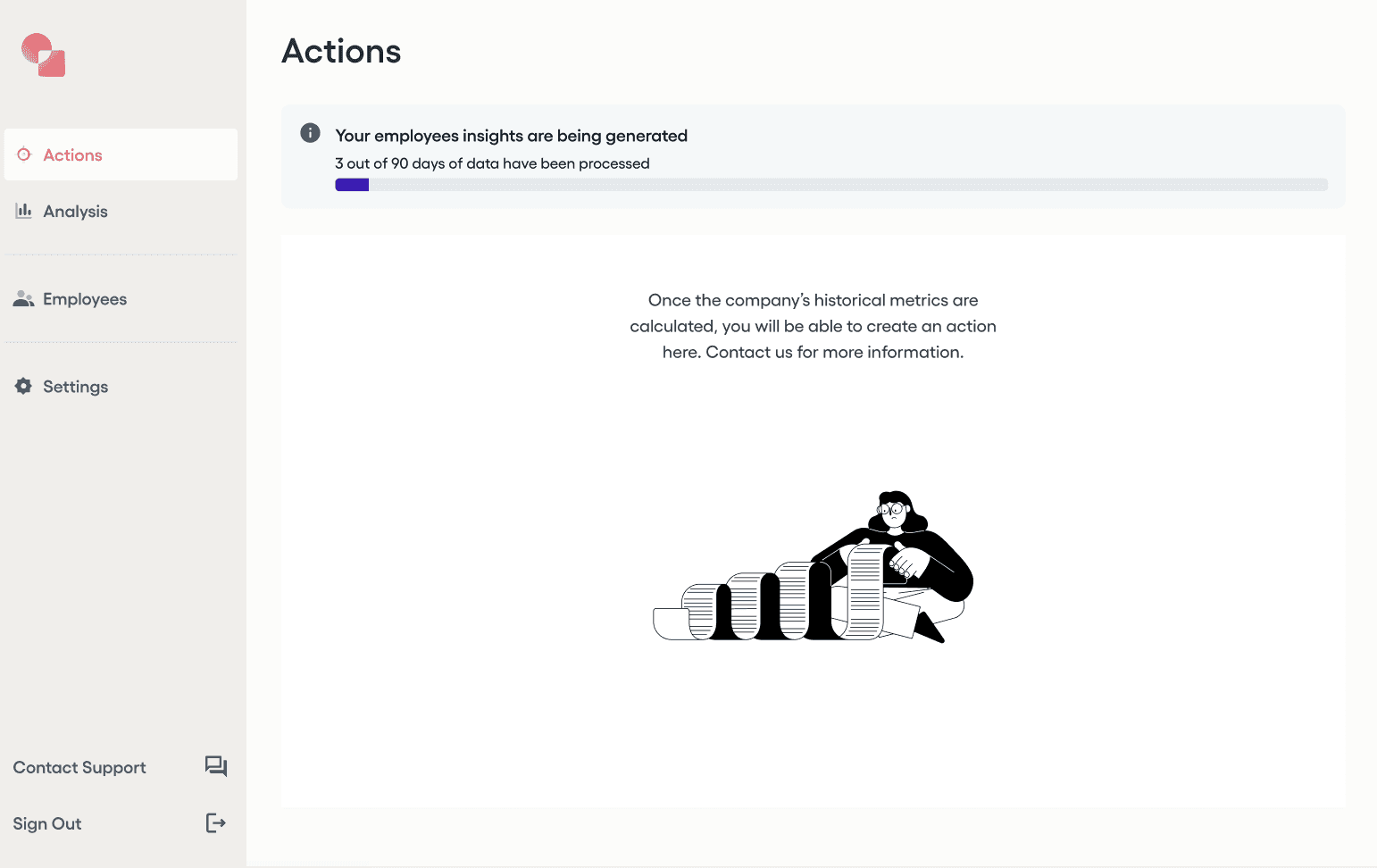
We also updated our empty states so user could be informed during all stages of account activation


We created space for automatic employee data submission

Learnings
After introducing small changes we were monitoring user behaviour and have scheduled follow up conversations with users who decided not to continue with Erudit to further understand their issues.
Also we were planing to keep interviewing companies that decided to continue with Erudit in order to understand what was their AHA moment and how we can bring that moment sooner in the onboarding process.
We also identified that HR managers struggle when it comes to persuading their decision makers to decide if they should go with Erudit so we are prioritising this as our next initiative.